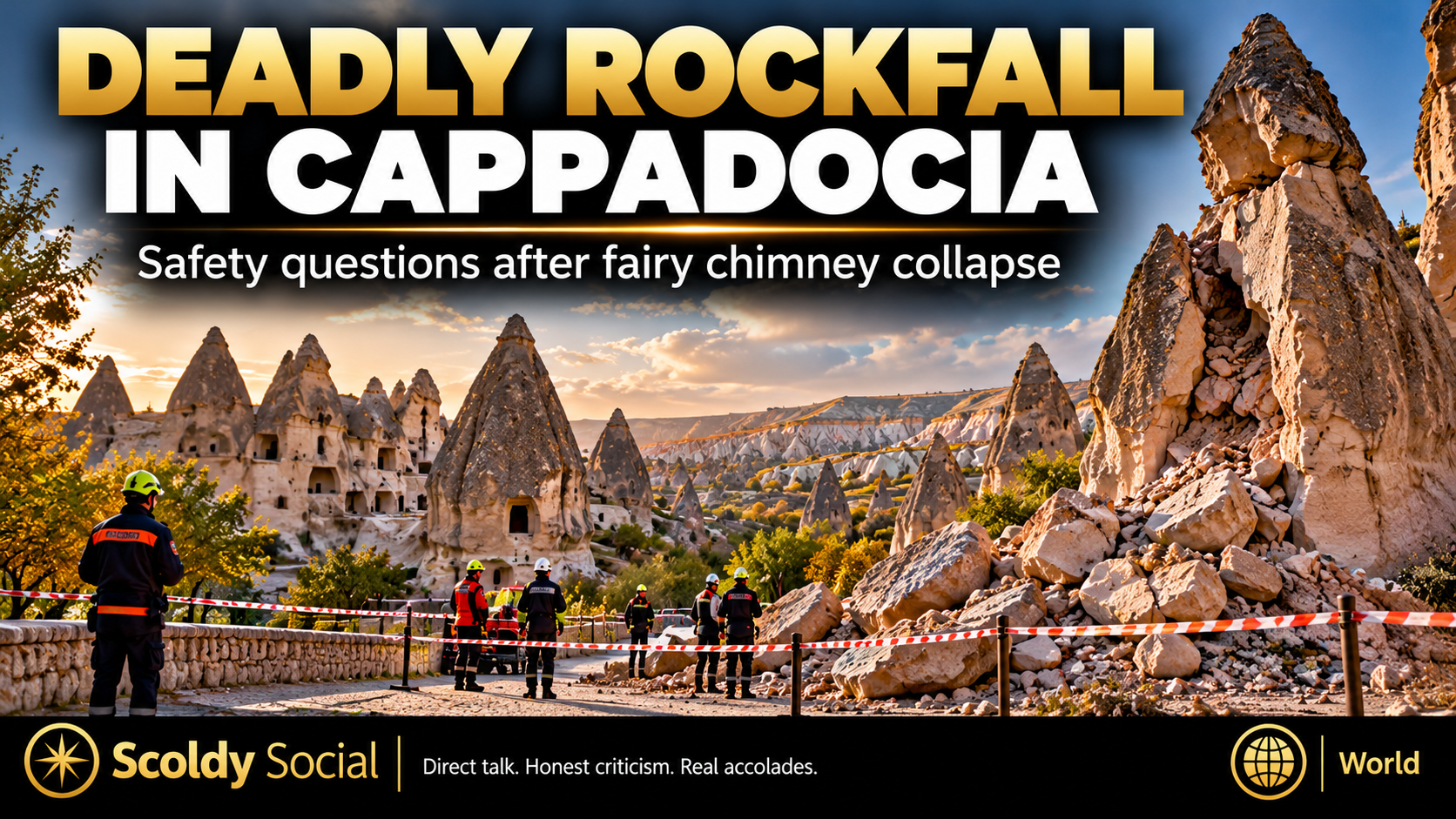
DEADLY ROCKFALL IN CAPPADOCIA — SAFETY QUESTIONS AFTER FAIRY CHIMNEY COLLAPSE
A section of a towering volcanic rock formation collapsed Thursday, October 29, near the entrance to the Göreme Open-Air Museum in Cappadocia, Türkiye, turning one of the country's best-known tourist landscapes into the scene of a rescue operation.
The Associated Press reported at least three people killed and five injured in its later coverage. Earlier reports from Reuters and Turkish media cited two deaths and fewer injuries. Rescue work was continuing as the reports developed, so the final toll may change.
The formation was one of Cappadocia's distinctive “fairy chimneys,” natural pillars shaped over time from volcanic rock. The region's extraordinary landscape, historic cave sites and underground cities draw visitors from around the world.
Nevşehir Governor Hüseyin Kök said recent heavy rain likely contributed to the collapse. Officials deployed rescue and medical teams, and Türkiye's justice minister said an investigation had begun. The collapse occurred on Republic Day, a national holiday.
This tragedy raises a difficult question for popular natural attractions. Geological landmarks are part of what makes destinations like Cappadocia remarkable, but they also change through erosion, weather and time. How can authorities identify dangerous formations and protect visitors without closing access unnecessarily?
The incident concerns a specific location; it does not establish that the entire Cappadocia region is unsafe. Visitors should follow current local advisories and any site closures.
DISCUSSION QUESTION: Should tourist authorities impose stricter inspections and temporary closures around vulnerable natural landmarks, even if doing so limits access to famous attractions?
🥲